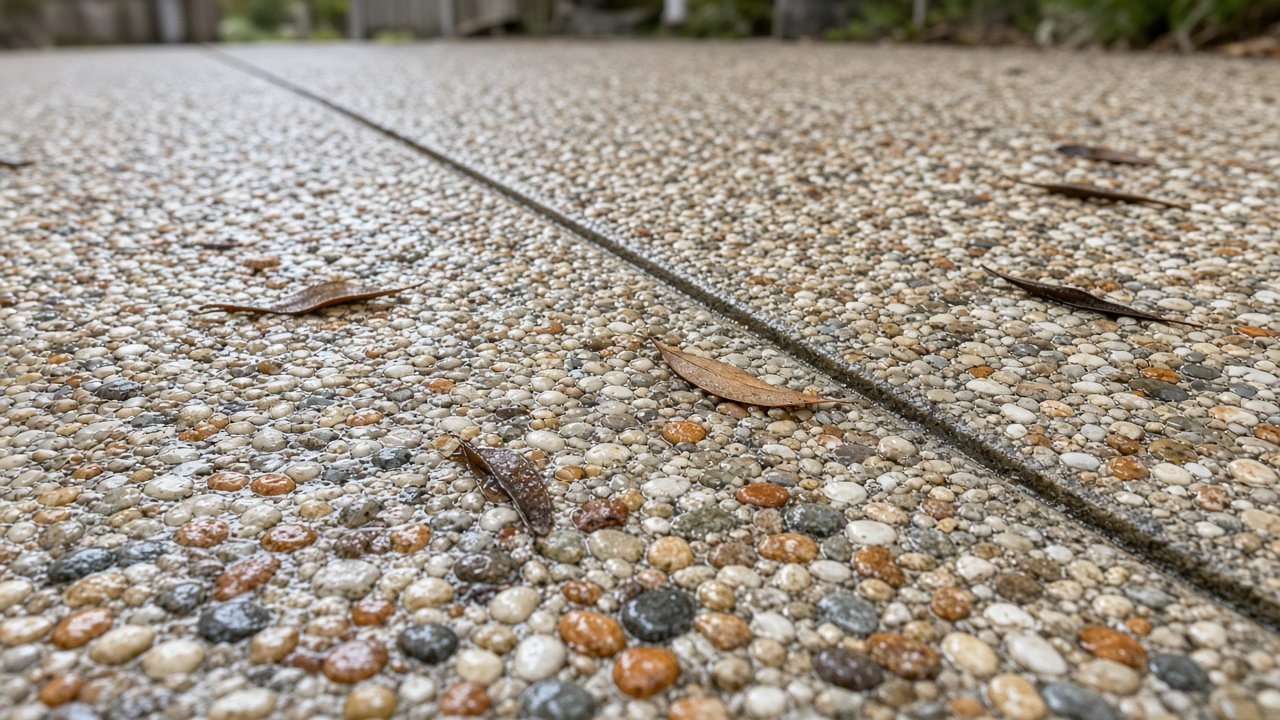
Exposed Aggregate Driveways in Frankston
Exposed aggregate driveways in Frankston with stone blends chosen on site, washed at the right moment for an even finish, built on a compacted base and sealed for bayside sun and salt air.
Email: info@frankstonconcretedriveways.com.au
Why exposed aggregate suits Frankston
Walk any Frankston street and you will see more exposed aggregate driveways than any other finish. There are good reasons. The textured stone surface grips in rain and on damp winter mornings, which matters on the sloping blocks of Frankston South and Mount Eliza. It hides tyre marks, sand tracked up from the beach, leaf litter and minor stains far better than smooth concrete. And because the stones come in many colours, it can be matched to a 1960s weatherboard, a 1980s brick veneer, a coastal timber home or a modern rendered build.
How exposed aggregate is made
Exposed aggregate is concrete with decorative stone mixed through it. After the concrete is placed and finished, a surface retarder is sprayed on to slow the setting of the top few millimetres. Once the concrete beneath has firmed up enough, the surface paste is washed and brushed away, revealing the tops of the stones. Later the surface is cleaned to remove any cement haze and, once cured, sealed.
Timing is everything
The difference between a beautiful exposed driveway and a patchy one usually comes down to timing on pour day. Wash too early and stones loosen or wash out. Wash too late and the paste will not come off evenly, leaving dull, smeared patches. Frankston's weather makes this harder: a hot northerly can dry one end of the slab long before the other, and a cool change can slow everything down. We size each pour to the crew available, watch the slab constantly, and wash bay by bay as each one is ready.
Choosing a stone blend
Stone blends vary in colour, size and shape. Rounded river pebbles in creams, tans and rust tones give a warm, classic look. Crushed basalt and granite blends in greys and charcoals suit contemporary homes and dark roofs. Mixed blends with white, grey and black stones are popular with coastal-style homes near the bay. Smaller stones give a smoother finish for paths and entries; larger stones give stronger texture on driveways. The cement colour, plain grey, off-white or tinted, also changes the overall look.
See it before you choose
Printed colour charts are not reliable for stone. We bring cured sample boards to every quote and lay them on the ground beside your house, garage door and garden so you can see the real colours in your own light. If you are undecided, we can point you to finished driveways in the area to look at from the street.
Base and structure come first
A decorative surface is wasted on a weak foundation. Every exposed aggregate driveway we build gets the same groundwork as any other: old surface removed, loose sand or soft clay excavated, crushed rock compacted in layers, slab thickness designed for the vehicles you use and steel supported at the correct height. Saw cuts are planned in a neat pattern and cut cleanly so they sit sharply within the stone.
Borders and combinations
Exposed aggregate can be framed with a plain or coloured border, a smooth trowelled edge or a band of contrasting stone. Some owners pair an exposed driveway with honed or polished aggregate paths, or with a plain broom side access to manage the budget. We plan transitions so the finishes meet neatly.
Common exposed aggregate problems and how we avoid them
Patchy exposure, where some areas show plenty of stone and others are smooth, comes from uneven retarder or washing at the wrong time. Cloudy, grey haze on the surface is cement residue left after washing; it needs proper cleaning before sealing. Visible lines between pours happen when one bay is finished long after the next. Loose stones come from washing too early. Cracks across the driveway come from late saw cuts or a poor base. We plan pour sizes, retarder application, washing order and saw cutting so each of these is controlled.
Sealing exposed aggregate
Sealing deepens the colour of the stones, makes the surface easier to clean, and helps resist oil, tyre marks and the salt carried inland from the bay. Penetrating sealers leave a natural look; film-forming sealers give a richer "wet look" and need renewing more often in full sun. On sloping driveways, entries and anywhere wet, we add anti-slip grit to the sealer. New exposed driveways are sealed once they have cured enough.
Looking after it
A hose and stiff broom handle most cleaning. A pressure cleaner on a moderate setting is fine before resealing, but avoid blasting directly at close range. Clean oil spots promptly. Avoid harsh acids on sealed surfaces. When the sheen fades and water stops beading, it is time to reseal. We offer cleaning and resealing visits for driveways we built and for others.
Exposed aggregate on slopes
On steep Frankston South, Olivers Hill and Mount Eliza driveways, exposed aggregate's grip is a real advantage. We often choose a slightly larger stone for extra texture, avoid high-gloss sealers on steep sections, and pair the driveway with a grated drain at the bottom so water does not flood the garage.
Exposed aggregate for new estates
In Sandhurst, Skye, Carrum Downs and other newer estates, design guidelines sometimes limit driveway colours or require finishes that complement the house. We check any covenants before you choose a blend, so the driveway is approved first time.
Combining with crossovers
Council standards often require the crossover over the footpath to be plain concrete. In that case we pour the crossover to the standard drawing and start the exposed finish at the boundary, with a neat joint line between them. Where council allows an exposed crossover, we can carry the finish right to the kerb.
Replacing a tired exposed driveway
Older exposed aggregate driveways from the 1980s and 1990s sometimes have lost stones, faded sealer, oil stains and cracks. If the slab is sound, cleaning, minor repairs and resealing can revive it. If it is cracked through, sinking or lifting, replacement is the better long-term choice. We assess honestly at the visit.
How we quote exposed aggregate
Your quote lists the stone blend by name, the cement colour, area, removal, base, slab thickness, steel, joints, drainage, crossover and sealing. If you would like to compare, we can price a plain or coloured version of the same driveway alongside it.
Questions to ask any exposed aggregate contractor
Which stone blend and cement colour? How will the pour be split into bays? Who washes the surface and when? Is the surface acid washed or cleaned before sealing? Which sealer, how many coats and is anti-slip included? How deep is the base and what thickness is the slab? Our answers are written into the quote.
Stone size and how it feels underfoot
Stone size changes both the look and the feel. Smaller stones give a finer, smoother texture that is comfortable for bare feet and suits entries and paths. Medium stones are the usual choice for driveways, balancing grip and comfort. Larger stones create a bold, rugged look and the most traction on slopes. We show each size on sample boards.
Exposed aggregate and pets, prams and bikes
Families often ask how exposed aggregate suits children, prams, bikes and pets. A medium or fine stone with a sealer is comfortable for most uses and easy to keep clean. Very coarse finishes can be harder on knees and paws, so we help you choose a texture that suits how you live.
Seasonal timing for exposed pours
Exposed aggregate is the finish most affected by weather on pour day. In summer we schedule early starts and keep pour sizes manageable; in winter we wait for a dry window and allow for slower setting. If the forecast changes, we reschedule rather than risk an uneven finish.
Exposed aggregate paths and entries to match
An exposed aggregate driveway often looks best when the front path, porch and side access use the same stone. Pouring them together means consistent colour from the same batch, matched joint lines and one set of sealing. If you would like the path in a smoother finish, a fine stone blend or honed version of the same aggregate keeps the look consistent while being kinder underfoot.
What happens on pour day
On the day, the crew arrives early, checks forms, steel and levels, then the concrete truck or pump begins placing the first bay. The concrete is spread, screeded and floated, retarder is sprayed, and then the next bay begins. Once the first bays have firmed enough, washing starts, moving through the driveway in order. Later the surface is cleaned, joints are cut and you are given care notes. We keep you informed throughout.
Why our exposed aggregate quotes name the stone
Some quotes simply say "exposed aggregate" without naming the blend, cement colour or stone size. That leaves room for a very different result from the one you pictured. We name the exact blend you chose from the sample boards, the cement colour and the sealer, so what goes down on the day matches what you agreed to. If a blend becomes unavailable, we contact you before substituting anything, and show you the alternative on a sample first.
Build specification at a glance
| Demolition | Old concrete, pavers, asphalt or gravel broken out and carted away; tree roots and soft spots removed |
|---|---|
| Excavation | Taken down past loose sand, organic soil or wet clay to firm ground, checked with a test hole |
| Base | Crushed rock placed in layers and compacted, deeper on soft or wet ground and on steep sites |
| Slab | Thickness matched to cars, utes, caravans, boats or delivery trucks, with thickened edges where needed |
| Reinforcement | Mesh or bar on chairs with proper cover, plus extra bars at corners, pits and the garage edge |
| Joints | Saw cuts planned in a neat grid and cut on time; isolation joints at the house and garage slab |
| Drainage | Falls away from the garage and house to grated drains, pits or the kerb; slopes controlled to stop scour |
| Finish | Exposed aggregate, plain broom, coloured, stamped, stencil or honed, sealed to suit sun and salt air |
Frankston ground, bay weather and council rules
Frankston sits where the sandy flats of the old Carrum swamp country meet the first hills of the Mornington Peninsula. Through Seaford, Carrum Downs, Frankston North and much of Langwarrin and Skye the ground is mostly grey or yellow sand, sometimes deep and loose, sometimes sitting over a clay layer that holds water after rain. Patterson Lakes and the low streets near Kananook Creek can have a high water table. Climb toward Frankston South, Karingal Heights, Olivers Hill and Mount Eliza and you meet heavier clays, weathered rock and steep blocks where water runs hard down a driveway in a storm. Near the foreshore, salt air reaches further inland than most people expect. Each of these needs a different base, fall and edge detail, which is why we dig and look before we price.
A driveway built entirely inside your boundary normally does not need a permit. The crossover, the section over the nature strip, footpath and kerb, is on council land. In Frankston, Seaford, Langwarrin, Carrum Downs, Skye, Karingal and Sandhurst that means a vehicle crossing permit from Frankston City Council. Mount Eliza falls under Mornington Peninsula Shire, and Patterson Lakes under the City of Kingston, each with its own crossover rules and standard drawings. Estate covenants in newer areas may also control driveway finishes and colours. We tell you at the visit exactly which approvals apply and look after the crossover paperwork.
What goes into a Frankston driveway quote
Our driveway quotes are broken into the parts of the job you can actually check. You will see the measured area in square metres, breaking out and removing the old driveway (concrete, brick pavers, asphalt, crushed rock or a cracked spray-paved surface), the excavation depth, the crushed rock base and how it will be compacted, slab thickness, the reinforcement and how it is supported, the finish or stone mix, saw-cut layout, grated drains and pits, the crossover and its council permit, and sealing if you want it. Items that only apply to some blocks, such as a concrete pump for a battle-axe lot, a skip on the street, a retaining edge on a slope or a temporary access plan while the driveway cures, are listed on their own lines.
You will not find a rate per square metre on this website. Two Frankston driveways of the same size can be very different jobs: one may be a simple pour on firm sand with good truck access, the next may need a tonne of old concrete broken out, clay replaced on a steep Frankston South block and a crossover rebuilt to current council standards. A rate would be wrong for most people, so we look at your site and price what it needs.
Exposed aggregate driveways and related work around Frankston
Exposed aggregate, plain, coloured and stamped driveways, council crossovers, steep-site driveways and sealing for Frankston homes from the foreshore to the hills.
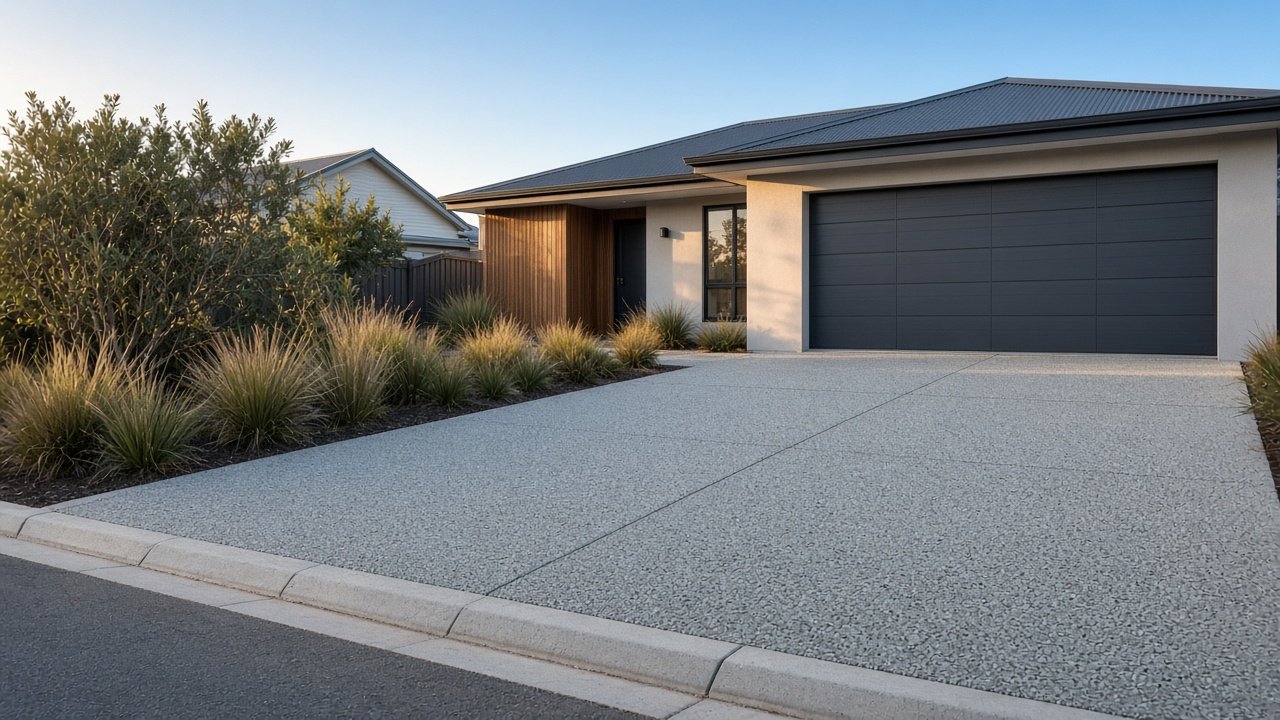
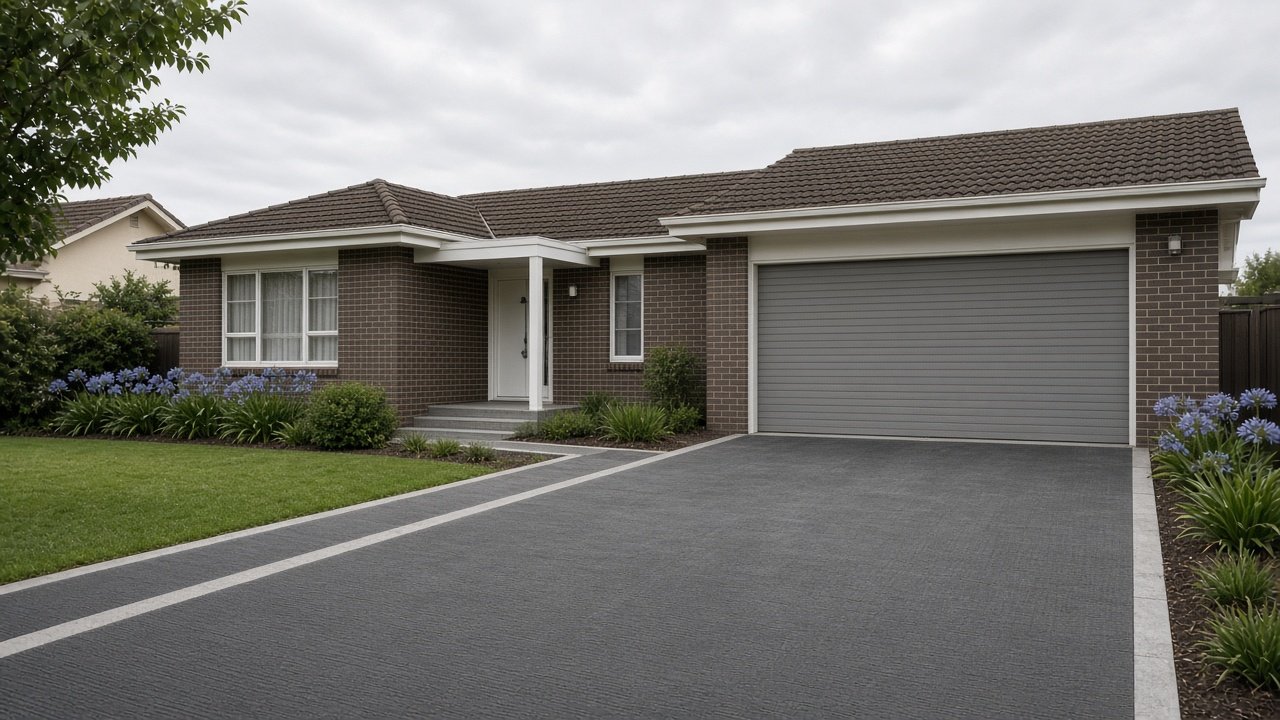
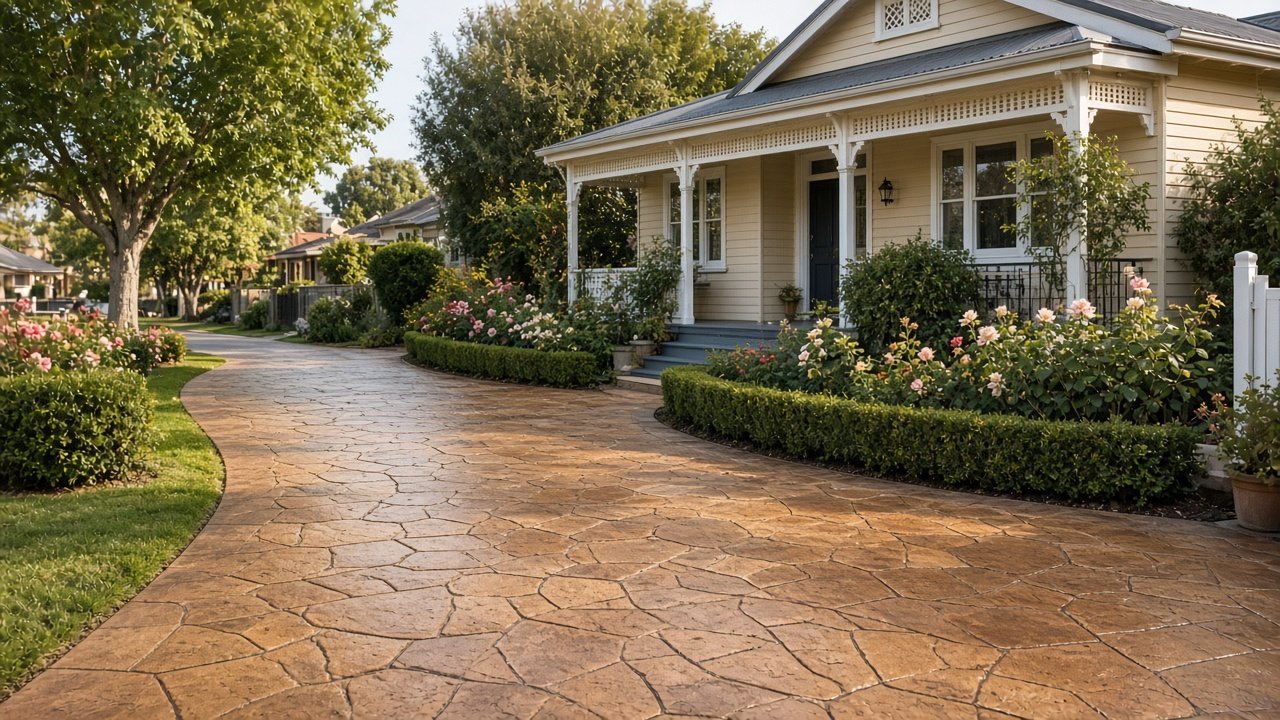
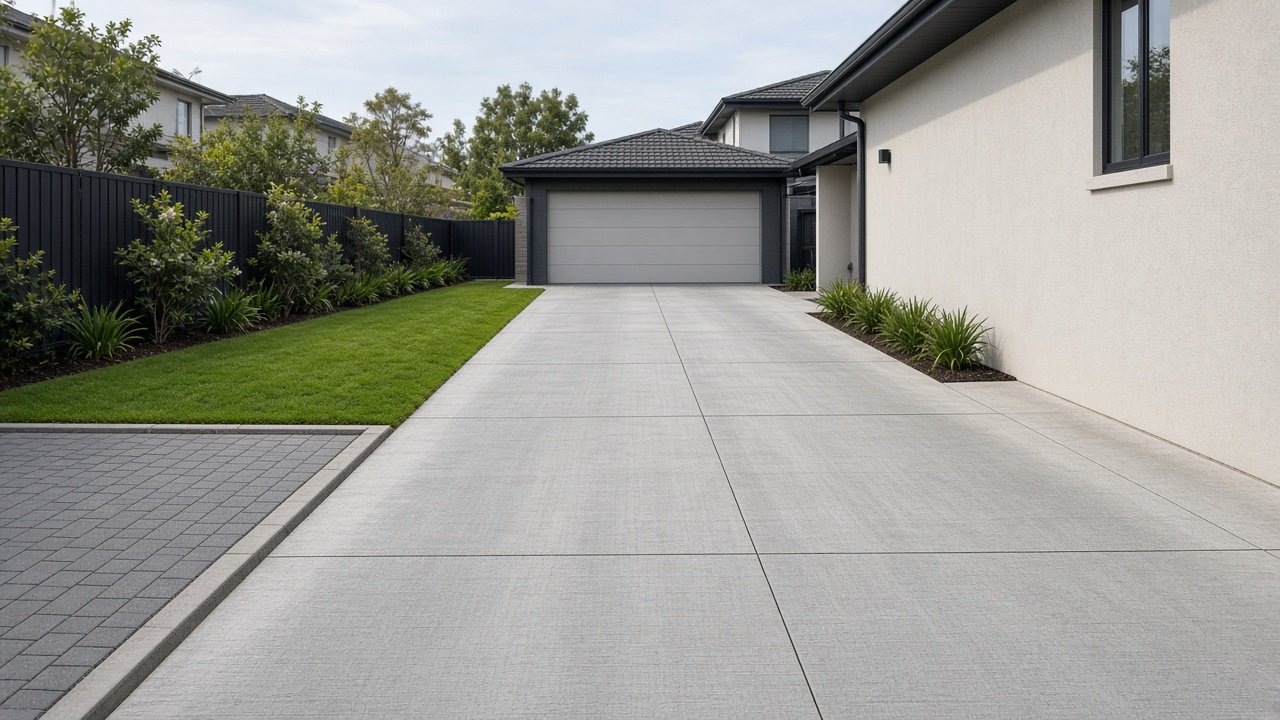
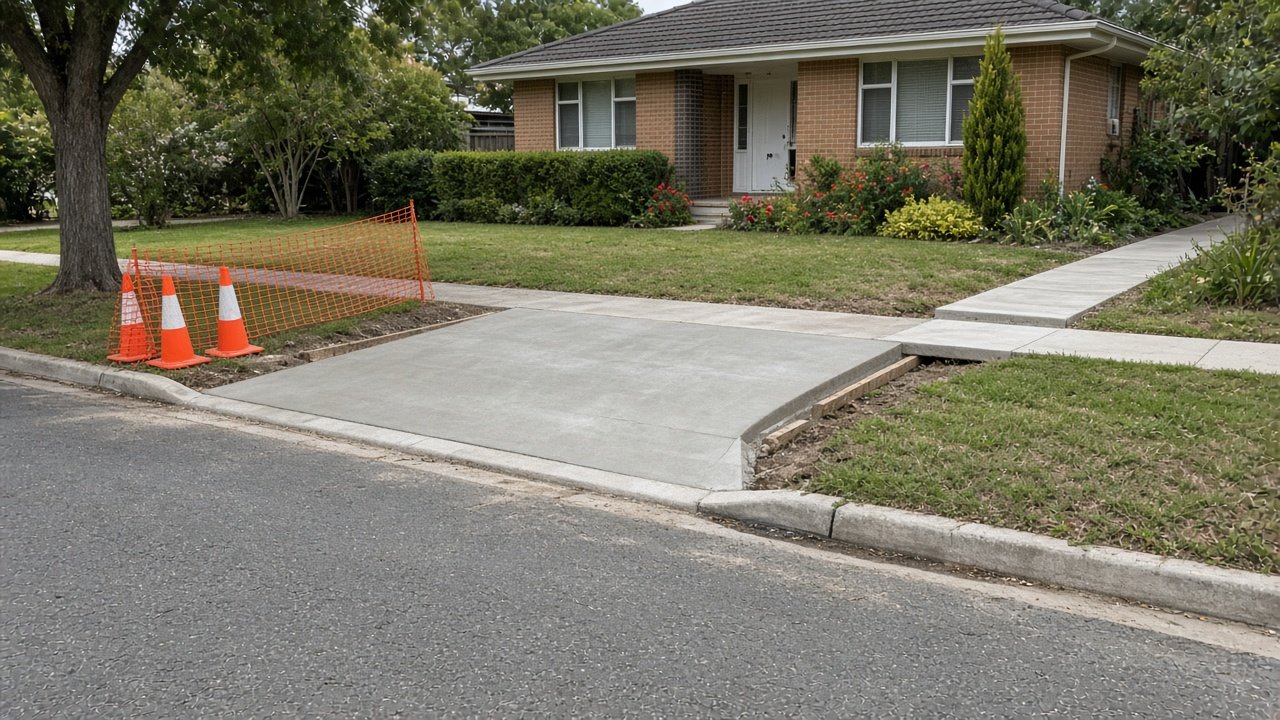
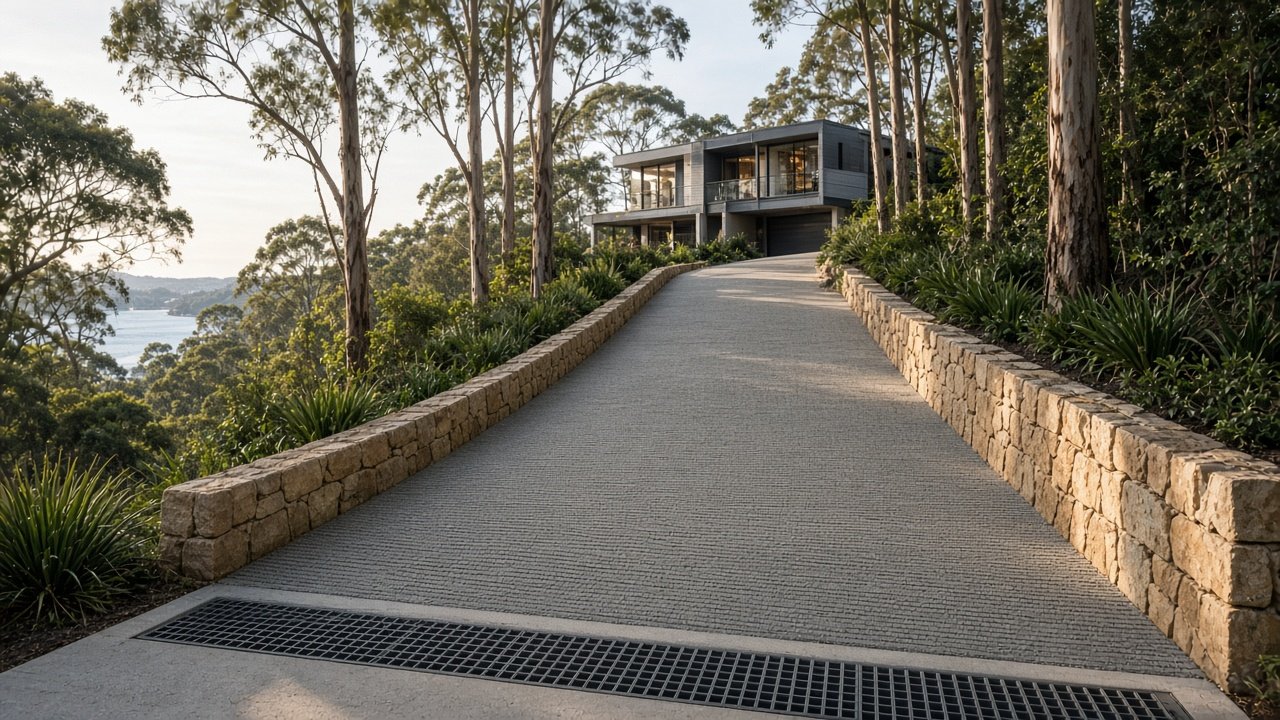
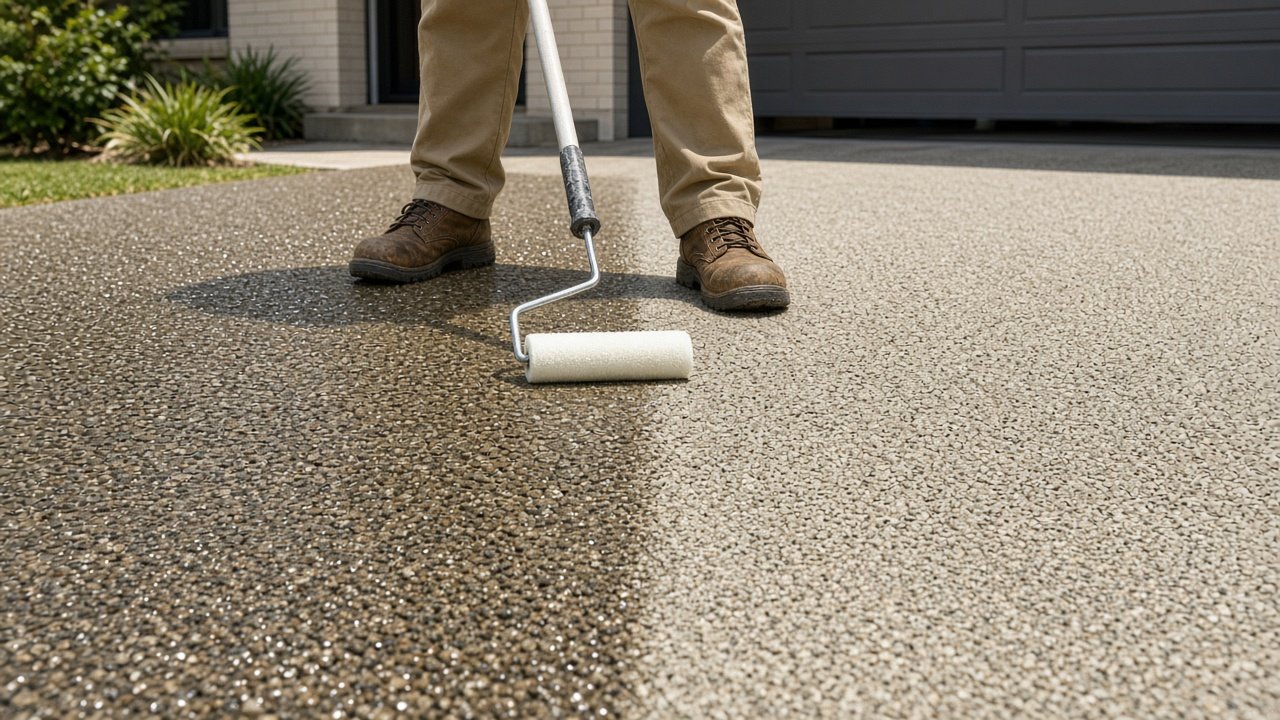
Pictures illustrate the driveway finishes and job types we handle around Frankston and the Peninsula.
Why Frankston owners choose us for their driveway
Driveways are our focus
We are not a general builder adding driveways to a long list. Driveways, crossovers and their finishes are what we do every week.
Base built for your block
Loose bayside sand, wet clay and steep hill blocks each get their own excavation, rock depth and drainage plan.
Quotes you can compare
No online rates and no guesses over the phone. Every quote lists each stage so you can line it up against others.
Permits and paperwork sorted
We handle crossover permits with Frankston City, Mornington Peninsula Shire or Kingston and check any estate rules.
From first call to finished driveway in Frankston
- 1
Call or send the form
Tell us your suburb, the driveway you have now and what you want. A photo from the street and one from the garage door help a lot.
- 2
We visit and measure
We measure, run levels from the road to the garage, dig a test hole, look at drainage and truck access, and bring finish samples to compare.
- 3
Written, itemised quote
You get an emailed breakdown: removal, excavation, base, slab depth, steel, finish, joints, drainage, crossover permit and sealing.
- 4
Demolition and base
The old driveway comes out, soft sand or clay is removed, crushed rock is placed and compacted, then forms and reinforcement go in.
- 5
Pour and finish
Concrete is placed, screeded and finished to your chosen surface, with the timing and curing adjusted for heat, wind or cold.
- 6
Cut, clean and hand over
Saw cuts are made, forms stripped, edges tidied and the site cleaned. You receive written notes on when to walk, drive and seal.
Exposed aggregate driveways across Frankston and nearby suburbs
Frankston South 3199
Frankston South is the hilly, leafy end of Frankston with bay views and big blocks. We build steep, sloping and decorative concrete driveways designed for clay, rock and fast-running stormwater.
Driveways in Frankston SouthFrankston North 3200
Frankston North is a flat, sandy suburb with many post-war homes being renovated or rebuilt. We replace old driveways and pour new ones for renovations, rebuilds and unit developments.
Driveways in Frankston NorthSeaford 3198
Seaford is the bayside suburb between Frankston and Carrum, with sandy blocks, Kananook Creek and the Seaford Wetlands. We build driveways designed for sand, salt air and high water tables.
Driveways in SeafordLangwarrin 3910
Langwarrin combines established family streets with larger semi-rural blocks on the sand belt. We build new and replacement concrete driveways, long driveways and parking areas for boats and caravans.
Driveways in LangwarrinCarrum Downs 3201
Carrum Downs has busy newer estates on old swamp country. We build driveways for new homes and replace older ones, with extra care on sandy, low-lying ground.
Driveways in Carrum DownsSkye 3977
Skye is a growing suburb of newer homes on sandy ground east of Frankston. We pour driveways, crossovers and full frontages for new and established homes.
Driveways in SkyeKaringal 3199
Karingal is a settled suburb of 1970s and 1980s homes around the Karingal Hub, rising to hilly Karingal Heights. We replace ageing driveways and build new ones on flat and sloping blocks.
Driveways in KaringalSandhurst 3977
Sandhurst is a master-planned estate around its golf courses. We build driveways that meet estate design guidelines, with exposed aggregate and coloured finishes to suit modern homes.
Driveways in SandhurstMount Eliza 3930
Mount Eliza is a leafy Peninsula suburb of large, often steep blocks. We build long, sloping and decorative concrete driveways and handle Mornington Peninsula Shire crossover permits.
Driveways in Mount ElizaPatterson Lakes 3197
Patterson Lakes is a canal-side suburb with waterfront homes and boats. We build driveways and boat parking pads designed for sandy ground and a high water table, and handle Kingston crossover permits.
Driveways in Patterson LakesExposed Aggregate Driveways questions
Is exposed aggregate slippery?
It is one of the grippiest concrete finishes. If sealed with a gloss sealer, we add anti-slip grit on slopes.
How often does exposed aggregate need resealing?
Usually every few years, depending on sun exposure, traffic and the sealer used.
Can stones come loose?
Occasionally a stone near the surface is dislodged, especially in the first weeks. Correct washing timing and sealing minimise it.
Can you match my existing exposed aggregate?
We can get close with a similar blend, but age, weathering and natural stone variation make an exact match unlikely.
Does exposed aggregate get hot?
Darker blends absorb more heat. Lighter blends stay cooler in summer.
Is exposed aggregate good near the beach?
Yes, provided the slab is well built and sealed to keep salt and moisture out of the surface.
Areas covered
Other services
Talk to a Frankston driveway concreter
Free site visits and written driveway quotes across Frankston, Seaford, Langwarrin, Carrum Downs and Mount Eliza. We publish no rates, because breaking out, subsoil, grade and truck reach are never the same twice.